
The safest way to plan hockey stick flex inventory is not to copy a universal ratio. Start with the players a store actually serves, put most of the first order into the flex ranges most likely to fit that group, and keep enough room to learn from sales before expanding into slower specifications.
For an adult-focused store, common senior flexes may deserve the largest share. A shop serving younger players needs a different balance of senior, intermediate and junior sticks. The final mix should come from local sales, customer requests and missed-sale records—not from the owner’s personal stick preference.
This guide is for retailers and pro shops planning inventory. It is not a player-level flex calculator.
Start With the Customer Group, Not a Flex Number
Before selecting flexes, define whether the store mainly serves adult recreational players, competitive senior players, teenagers, junior players, teams and coaches, or online buyers from several regions.
A store whose customers are mainly adults may reasonably place more emphasis on senior products. A shop close to a youth program may need a much larger intermediate and junior share. An online seller with no reliable customer history should be more conservative because its audience is less predictable.
The first decision is therefore the category mix—Senior, Intermediate and Junior. The exact flex numbers come after that.
Official brand guides also treat size, length and flex as connected decisions. Bauer presents its calculator as a recommendation rather than a rule, while Warrior advises choosing the appropriate size before refining flex for strength and playing preference.
Sources: Bauer Flex and Measurement Guide; Warrior Hockey Stick Buying Guide.
Build a Core Range, Then Add Exceptions
In HockeySourcing’s recent customer conversations, 75 and 77 flex have been among the most frequently requested options, with 85 also remaining a common senior choice. Michael has also observed that requests for very stiff options such as 102 flex are much less common than they were four or five years ago.
This is HockeySourcing’s business observation, not a market-wide sales statistic. A retailer should use it as a starting hypothesis and test it against local demand.
- Put the largest share into the core flexes that match the store’s main players.
- Add a controlled number of adjacent flexes.
- Treat unusual specifications as test inventory or order-on-request until demand is proven.
- Avoid filling every possible flex simply to make the range look complete.
Do Not Assume the Same Printed Flex Feels the Same
Michael’s warning to first-time buyers is that two sticks labeled 75 flex can feel different in use. Product line, shaft geometry, kick point, length, balance and construction all affect how a stick loads and releases. A Bauer Vapor, Bauer Nexus and CCM JetSpeed with similar labeled flexes should not automatically be treated as interchangeable products.
Pro Stock Hockey likewise notes that sticks with the same labeled flex can feel different across models and brands because of build and kick-point differences. Source: Pro Stock Hockey Flex Guide.
For inventory planning, record both the flex and the product family. If a customer changes models, do not assume the old flex choice transfers perfectly without testing.
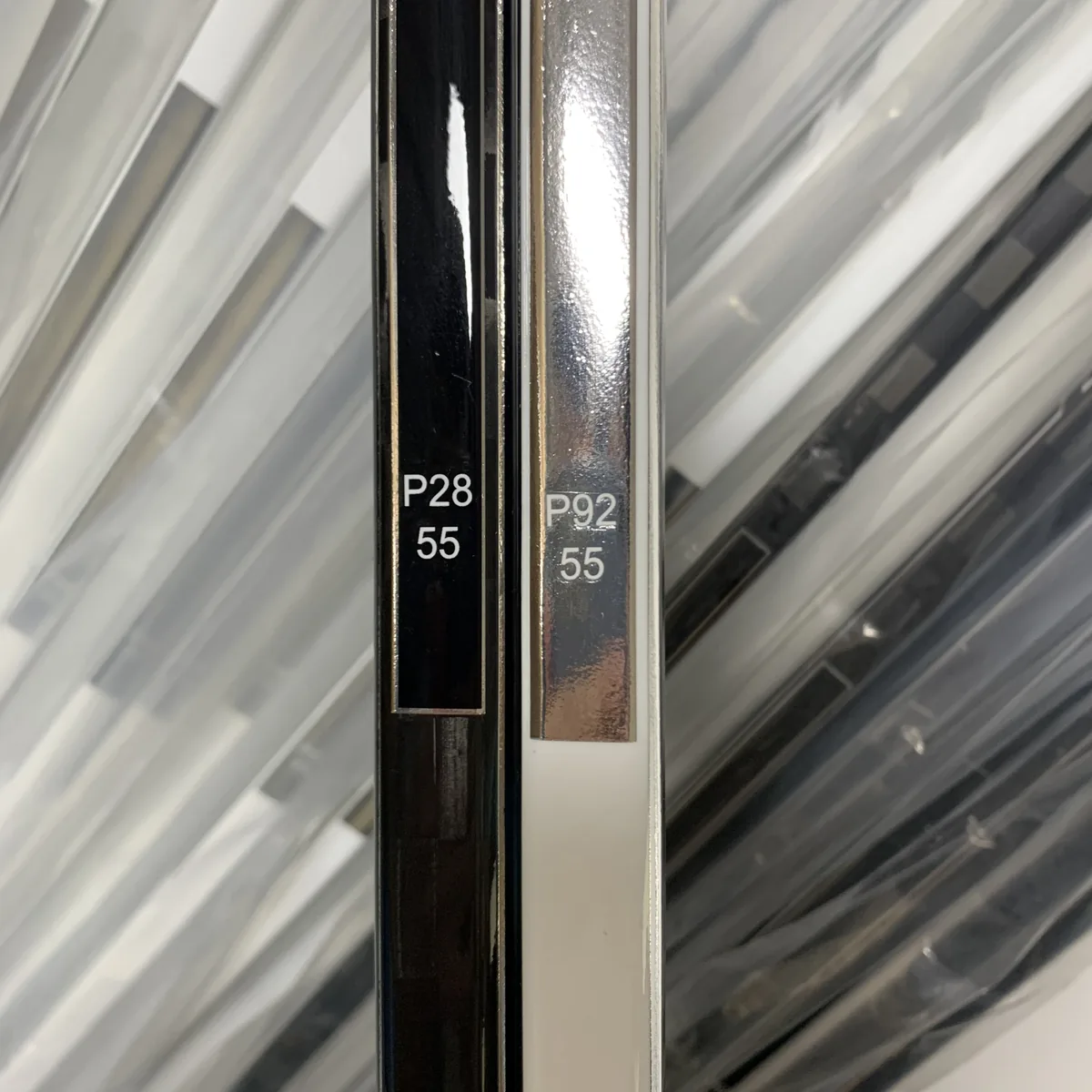
These two real sticks share a 55 flex label but use different curves. Retail inventory must be planned as complete specifications, not flex alone.
Separate Adult, Intermediate and Junior Demand
Adult-focused retailers
Start with the senior flexes most often requested by existing adult customers. Use actual questions at the counter, sales history and team contacts to decide how much variety is justified.
Mixed adult and teenage markets
Intermediate products can differ in shaft dimensions, length and available flex—not only stiffness. Track when customers ask for a softer flex but still care about shaft feel and length.
Youth programs and junior-heavy shops
Make the junior and intermediate range visible enough to serve the program, but avoid estimating the mix from age alone. Coaches, parents and fitting staff can provide better local evidence.
Online sellers
Use a narrower first range unless search, inquiry or sales data clearly supports more. An online store serving several countries may see broader demand, but that also makes unsupported forecasting more expensive.
Use a Flex Inventory Worksheet
For each flex and product family, track opening stock, units sold, units remaining, days in stock, missed requests, fit-related returns, product category, length, hand and curve.
Flex should not be analyzed alone. A slow-moving 85-flex stick may be slow because of its curve or hand, while another 85-flex combination sells quickly.
Reorder From Evidence
Michael recommends comparing the original purchase with the flexes that actually sold before placing a replenishment order.
- Which flexes sold through fastest?
- Which combinations produced repeated requests?
- Which flexes sold only after discounting?
- Which customers left because the needed flex was unavailable?
- Did demand come from one team or several unrelated buyers?
- Is the next order for the same season and customer group?
Then protect the proven core, reduce slow combinations and test only a small number of new specifications.
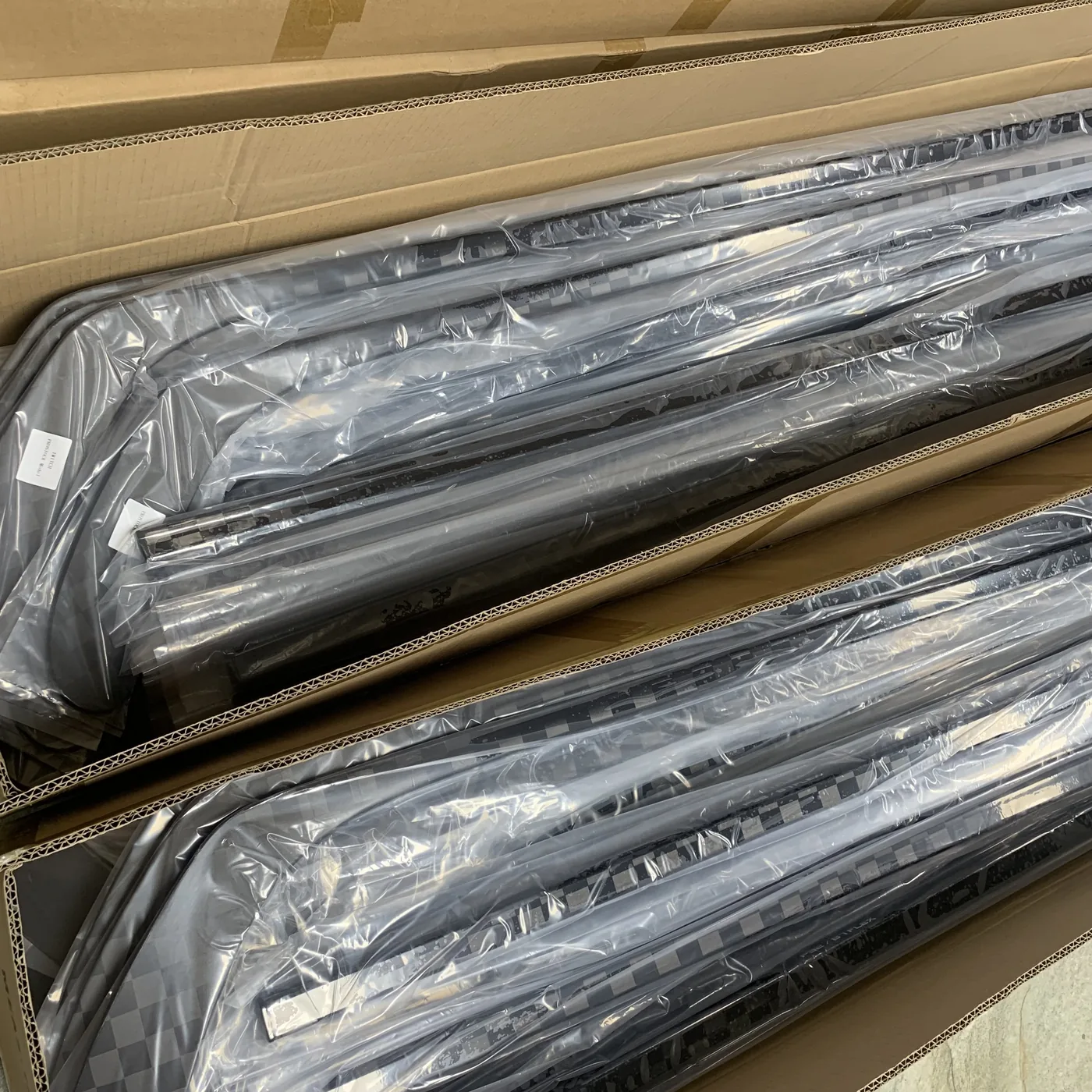
A controlled assortment still needs to be organized and protected as complete sellable specifications.
Common Flex Inventory Mistakes
Buying the owner’s preference
One player’s preference does not prove the store’s demand.
Treating flex as the only specification
Hand, curve, length, category, kick point and product family can determine whether the exact stick is sellable.
Overbuilding the stiff end
Very stiff sticks may be right for particular players, but they should not receive a large share without local evidence.
Ignoring missed sales
Sales records show what was available; a missed-sale log shows what customers wanted but could not buy.
Expanding after one unusual order
Separate one-time team demand from repeat retail demand before changing the baseline.
A Practical First-Order Process
- Define the main player groups and sales channel.
- Split the order into Senior, Intermediate and Junior categories.
- Choose a small core of flexes for each relevant category.
- Add adjacent flexes in controlled quantities.
- Keep unusual specifications available by request where practical.
- Track sales and missed requests by full specification.
- Review the data before replenishment.
- Change the next mix gradually.
Retailers still building their first range can review HockeySourcing’s in-stock hockey sticks before committing to a broader custom assortment.
Michael’s Practical Recommendation
For a store serving mostly adults, 75/77 and 85 may be sensible flexes to investigate first based on HockeySourcing’s recent conversations. But the correct allocation still depends on player age, strength, product family, location and sales channel.
Start with the clearest demand. Keep the first assortment controlled. Record the combinations that sell and the requests you cannot fill. Let the second order be more accurate than the first.
Planning a dealer flex assortment? Contact HockeySourcing with your target country, customer type, player categories and any existing sales data.