
There is no universal left- and right-hand hockey stick ratio for every dealer order. The safest first order follows the local player base, existing sales, and collected requests; the next order should improve from what actually sold.
Start With the Market You Serve
Michael’s customer observations show why a single ratio is risky. In some U.S. customer groups, left- and right-hand demand has been close to even, sometimes with slightly more right-hand demand. In Canadian customer groups, he often sees stronger left-hand demand, around 70%.
These are HockeySourcing business observations, not country-wide market statistics or a fixed stocking formula. Local clubs, player age, sales channel, and the retailer’s own customer base can all produce a different result.
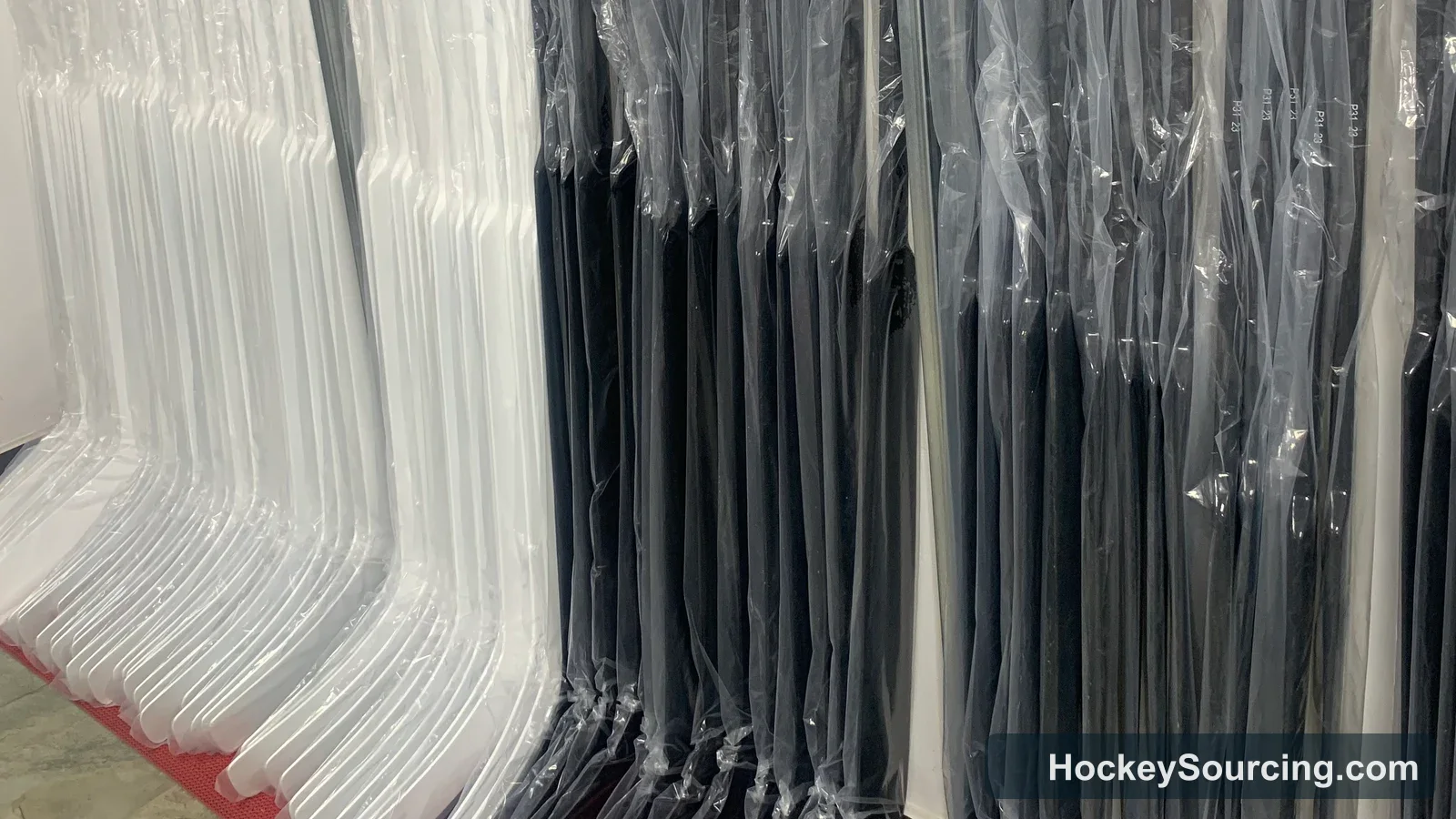
Real blank hockey stick inventory grouped by specification. No customer Logo or shipping label is visible in the publication crop.
When There Is No Sales History
A new dealer does not need to guess alone. Michael recommends asking local players directly. A short check with about 20 relevant players can provide an early view of local hand preference before a larger order is placed.
Ask each prospective buyer or player group for the full specification, not only hand:
- left or right hand;
- flex and length;
- curve;
- senior, intermediate, or junior category;
- product family or playing level;
- likely purchase timing.
The goal is not to create a perfect forecast from a small sample. It is to make the first decision more evidence-based and to identify whether a 1:1 starting mix is safer than a strong local tilt.
Different Buyer Types Need Different Planning
Teams and coaches can plan from the players they already serve. They should collect hand preferences from the actual group rather than relying on a national assumption.
An online seller faces a broader and less predictable audience. If there is no dependable customer history, Michael’s practical advice is to begin closer to a 1:1 left/right mix, then adjust as sales records grow. A retailer with local counter sales can use its own history more quickly, while a new brand may need to treat the first order as a controlled test.
What One Repeat-Order Case Shows
HockeySourcing reviewed eight main orders from one anonymized repeat customer: 3,975 sticks across 315 non-zero specification records. In that single case, left-hand sticks accounted for 2,212 units (55.6%) and right-hand sticks for 1,763 units (44.4%).
This is an anonymized single-customer case, not evidence for a national ratio or a rule that every dealer should copy. It demonstrates that repeat buyers manage a mix of hands alongside flex, curve, and other specifications over time.
Avoid the Cost of a Wrong Mix
An incorrect hand mix can lock up cash in products that do not match demand. It can also leave a seller unable to fulfill an order even while holding inventory in the opposite hand. Keep the first order controlled, record requests that cannot be filled, and use the next purchase to correct the mix.
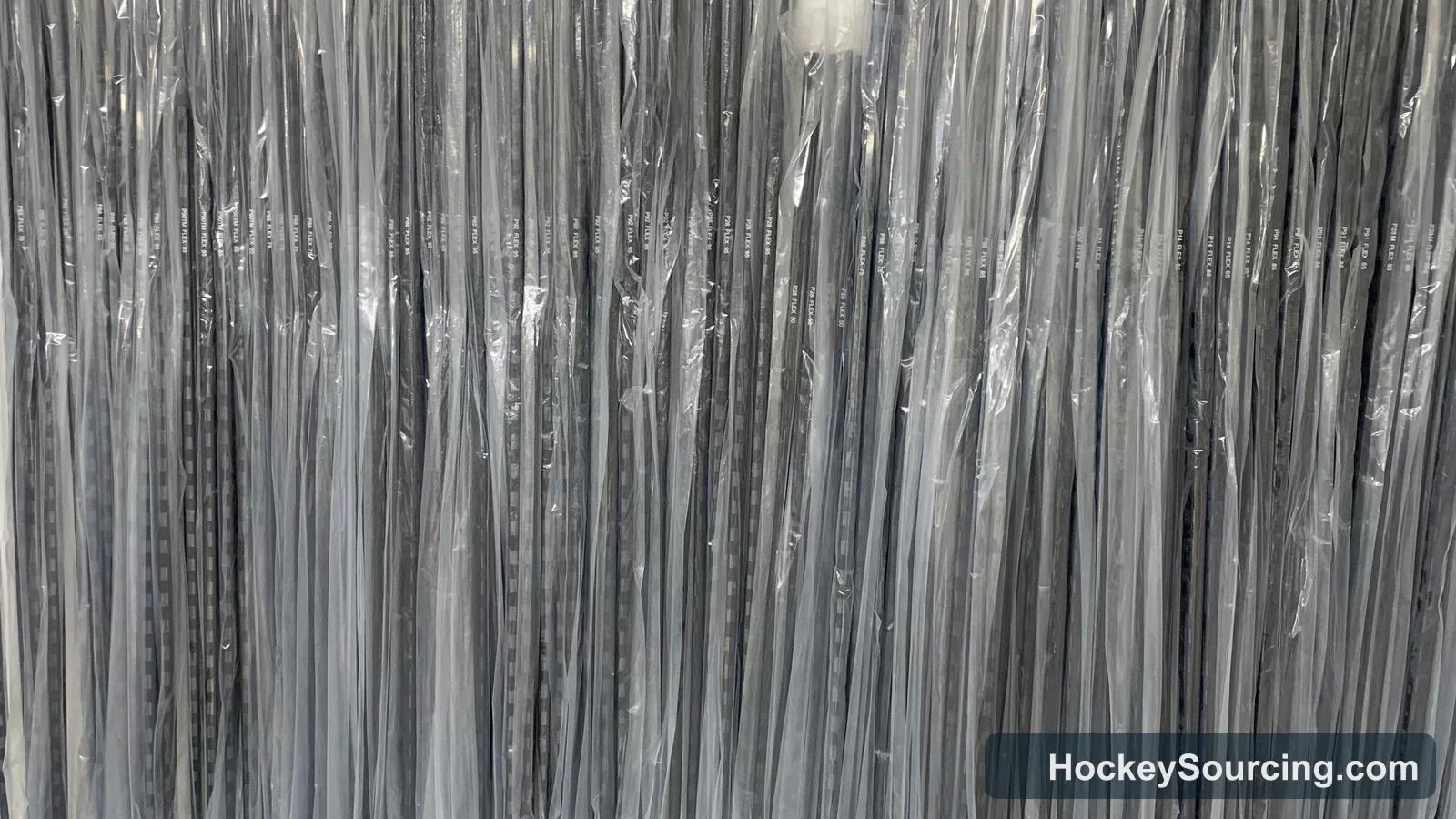
Real grouped blank-stick inventory illustrating why hand must be tracked together with flex and other specifications.
A Reorder Process That Learns
- Count sales by full specification, including hand, flex, curve, length, and product family.
- Record missed sales where the needed hand was unavailable.
- Separate one team order from repeat retail demand.
- Reduce slow combinations and protect proven combinations.
- Change the balance gradually instead of reacting to one unusual week.
The first order creates a baseline. The second order should be more accurate because it uses real sales and request data rather than assumptions.
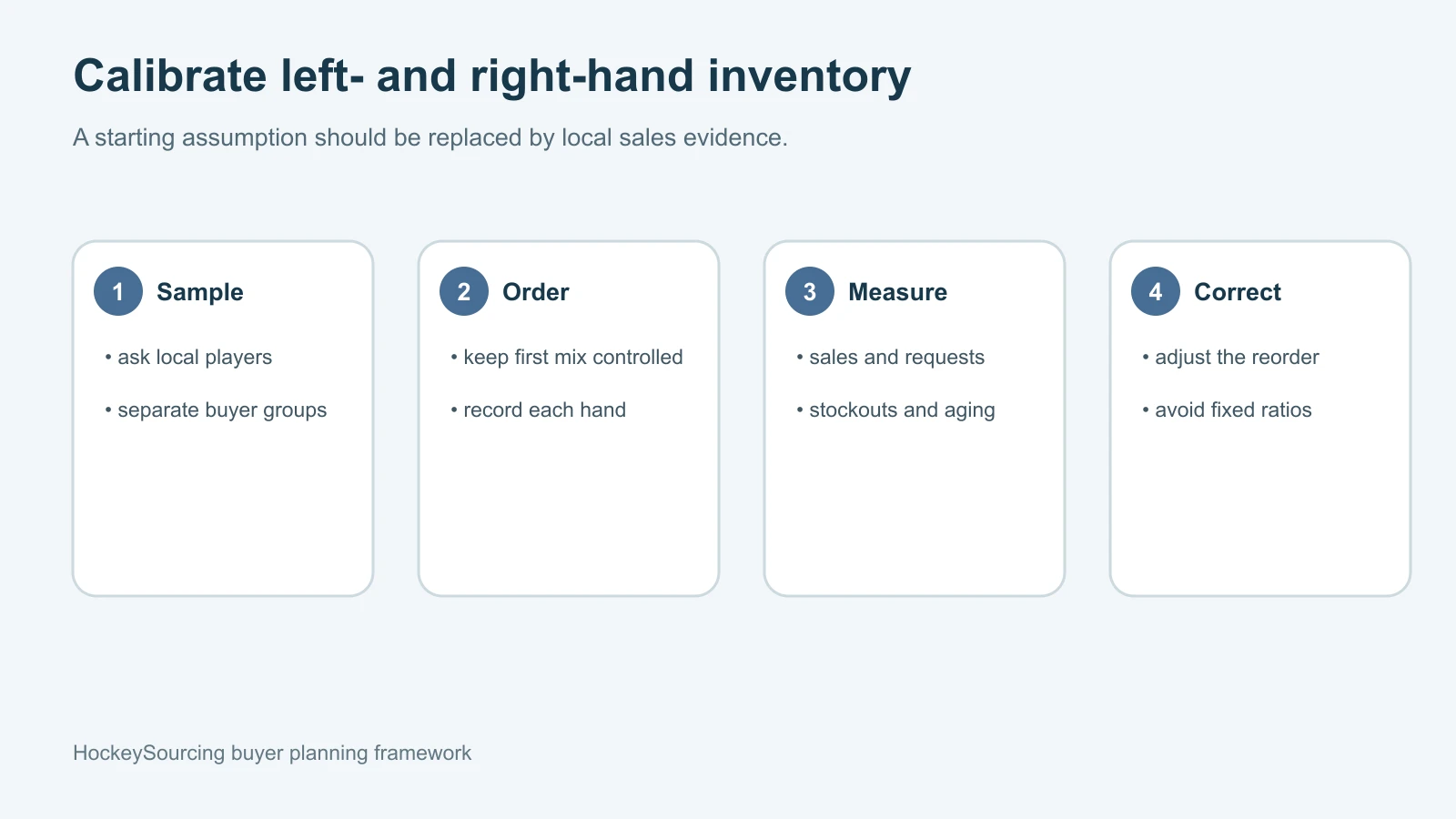
An original process for replacing a starting assumption with local player, sales, and reorder evidence.
Build a Local Hand Mix Before Expanding
Use local players, existing customer requests, and early sales to decide the left/right balance. Do not treat one country observation or one customer’s order history as a universal formula.
Planning your first dealer order? Review HockeySourcing’s in-stock hockey sticks and contact HockeySourcing with your target country, buyer type, and any hand-preference data you already have.