
The safest way to plan P92 and P28 inventory is to start with the curves customers already request, keep less common curves controlled, and use actual orders to refine the next purchase. P92 and P28 can be sensible curves to investigate first, but neither is a fixed rule for every store.
Why P92 and P28 Belong in the First Conversation
In Michael’s customer conversations, P92 and P28 are the curves most often recognized by players, coaches, and new retailers. They have been familiar choices for years, so coaches may recommend them when players are first developing preferences.
That makes them a practical starting point, not proof that every buyer needs the same mix. Record curve requests alongside hand, flex, length, and product family.
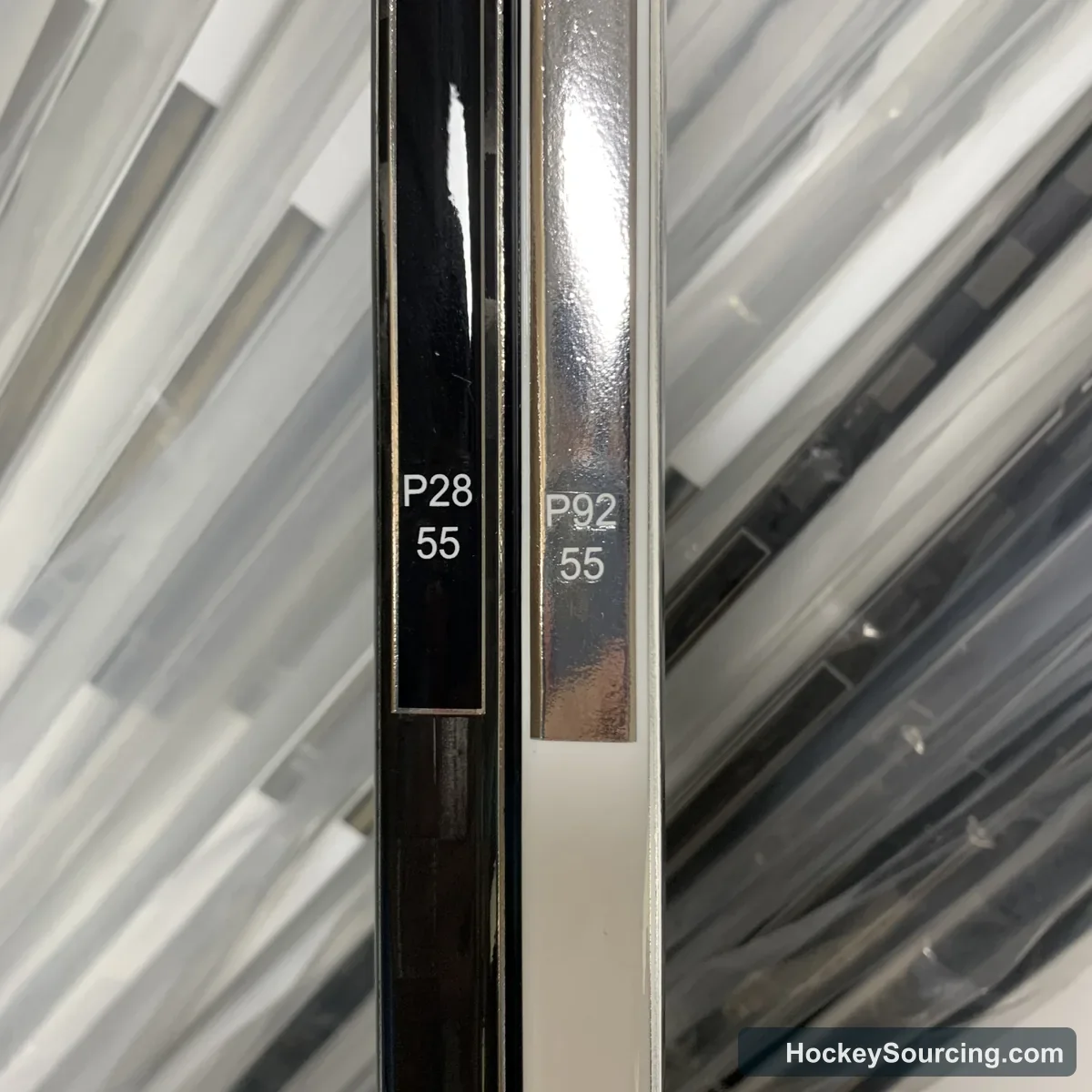
Approved HockeySourcing close-up of P28 and P92 specifications prepared for inventory.
Do Not Buy Only the Owner’s Preferred Curve
New sellers can make an expensive mistake by treating their personal curve as the whole market. A curve that works well for one player can become slow stock if the store’s customers ask for something else.
Michael has seen sellers buy more specialized curves, such as P02 or P91A, before they have reliable sales data. Less common curves are not wrong; they are better treated as a test, a special order, or a small controlled allocation until demand is clear.
Use a Core-and-Test Mix
For an initial assortment, Michael’s practical starting point is to place most curve inventory in the commonly requested options and reserve a smaller share for other choices. In some cases, this can mean roughly 75% in the strongest-selling curves and about 25% for controlled alternatives.
This is an example of a planning method, not a fixed HockeySourcing package, MOQ, or market-wide ratio. The right allocation depends on the store’s country, player groups, season, and existing demand.
What One Anonymized Customer Case Shows
HockeySourcing reviewed eight main orders from one anonymized repeat customer: 3,975 sticks across 315 non-zero specification records. In that single case, P92 accounted for 1,483 sticks (37.3%) and P28 for 1,262 sticks (31.7%). Together, they represented 69.1% of the order volume.
This is an anonymized single-customer case, not a market-wide benchmark or a recommendation to copy the same percentages. Its useful lesson is that a mature buyer may keep a strong core of familiar curves while still maintaining a wider specification range over repeated orders.
Adjust for Season and Evidence
At the beginning of a season, a retailer may choose to carry more curve variety because more players are replacing sticks and asking for established preferences. When sales data and customer requests are unclear, it is safer to record exact orders before expanding the range.
- Which curves sold without discounting?
- Which requests could not be filled?
- Which curves were requested by several unrelated customers?
- Did demand come from one team or from repeat retail sales?
- Did hand, flex, and curve combinations sell together?
Do not reorder from the curve total alone. A P92 can move differently by hand, flex, length, and product line.
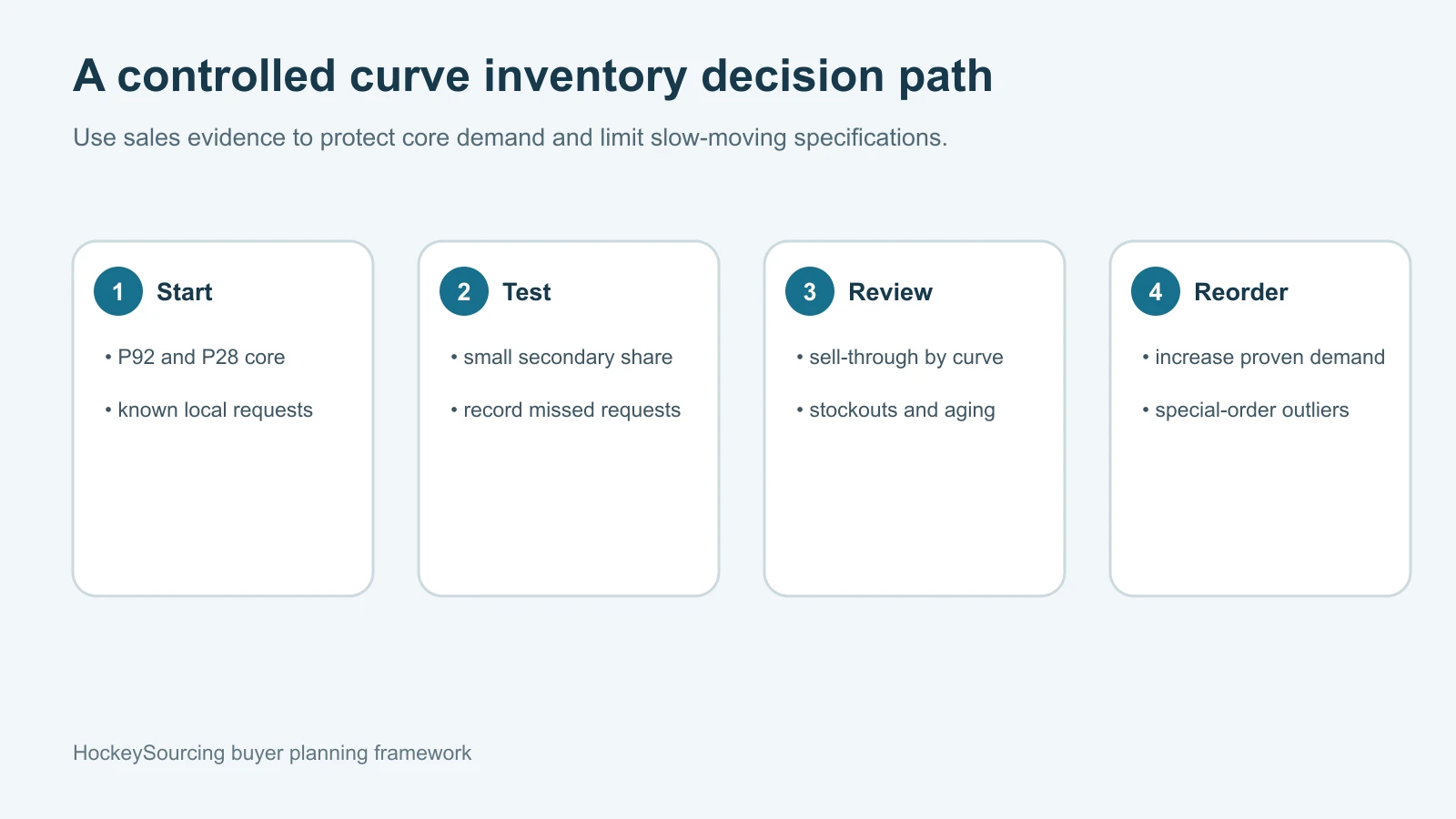
An original planning framework for testing, reviewing, and reordering curve inventory without treating one ratio as universal.
A Practical First-Order Checklist
- Define the main player groups and sales channel.
- Record current curve requests before finalizing the mix.
- Put the strongest demand into a core P92/P28 range where appropriate.
- Keep specialized curves controlled until local evidence supports more.
- Track full specifications and missed sales after launch.
- Change the next order gradually from sales evidence.
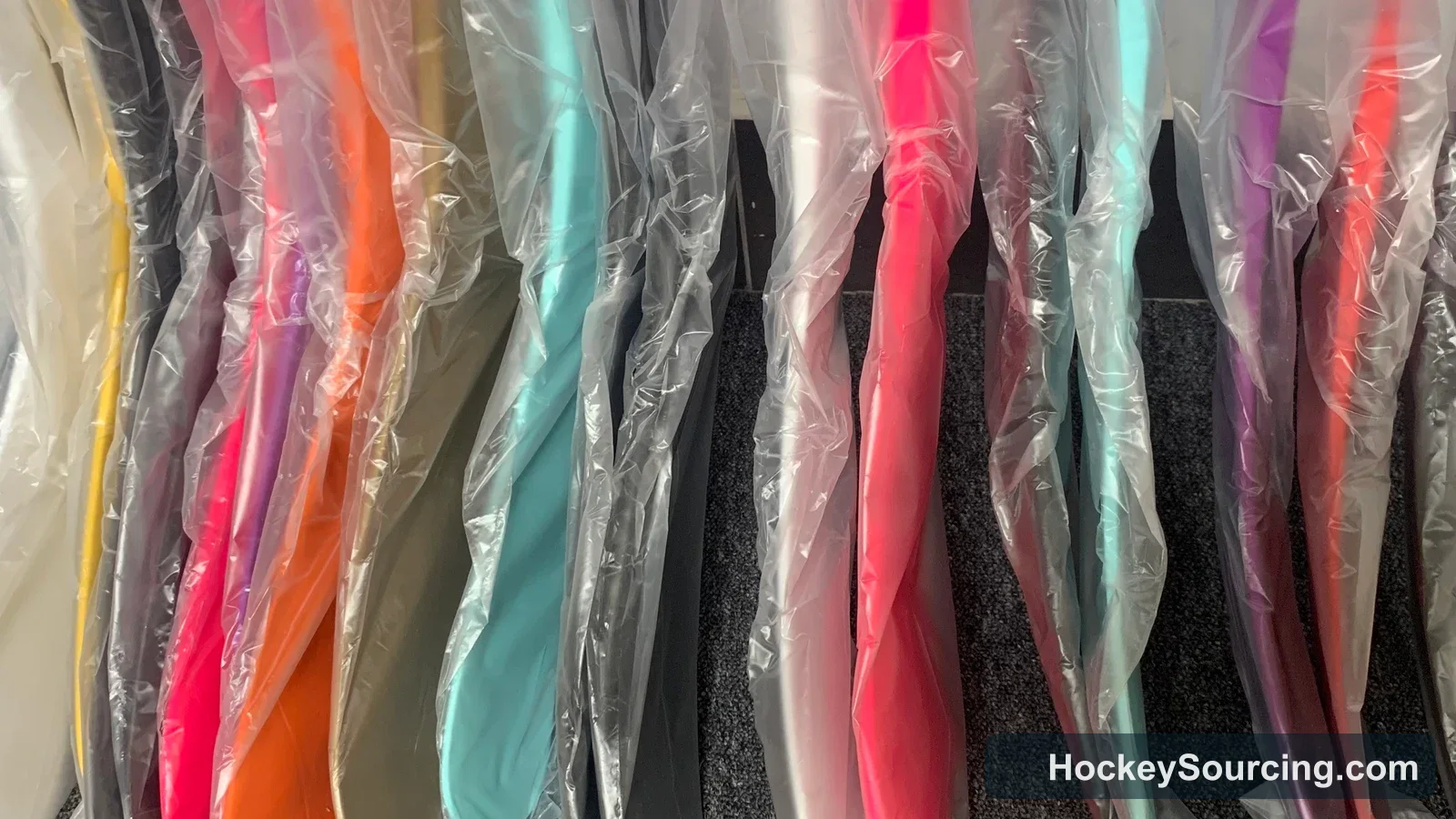
Real packaged hockey stick blades showing why curve choices should be planned as a controlled assortment rather than one universal option.
Build the Range From Buyer Demand
P92 and P28 can reduce uncertainty in a first assortment because they are familiar to many players. They cannot replace a retailer’s own sales records. Start with the clearest demand, preserve room for exceptions, and let each reorder improve the mix.
Planning a curve assortment for your store? Review HockeySourcing’s in-stock hockey sticks and contact HockeySourcing with your player groups, target market, and existing curve requests.