
The safest way to start selling hockey sticks is usually not to fill a room with inventory. It is to separate three decisions:
- Does the product perform well enough?
- Will real buyers place an order?
- Which hands, flexes and curves do those buyers actually need?
A player starting a small brand may begin by testing only a few sticks with teammates or friends. After the product is accepted, the next step should be collecting demand – not guessing at a large inventory mix.
This staged approach is especially useful for players, coaches and creators who already have access to a hockey community but do not yet have reliable sales history.
Why Early Hockey Stick Inventory Is Risky
Hockey sticks are not one simple product. A buyer may need a particular combination of left- or right-hand orientation, flex, curve, player category, grip, finish, weight and playing characteristics.
When a new seller buys inventory before speaking with customers, every combination is a forecast. A stick can be a good product and still remain unsold because it is the wrong specification for the available buyer.
Unsold stock locks up cash and may push the seller to discount too early. The goal is not zero inventory. The goal is to make each increase in inventory follow a reduction in uncertainty.
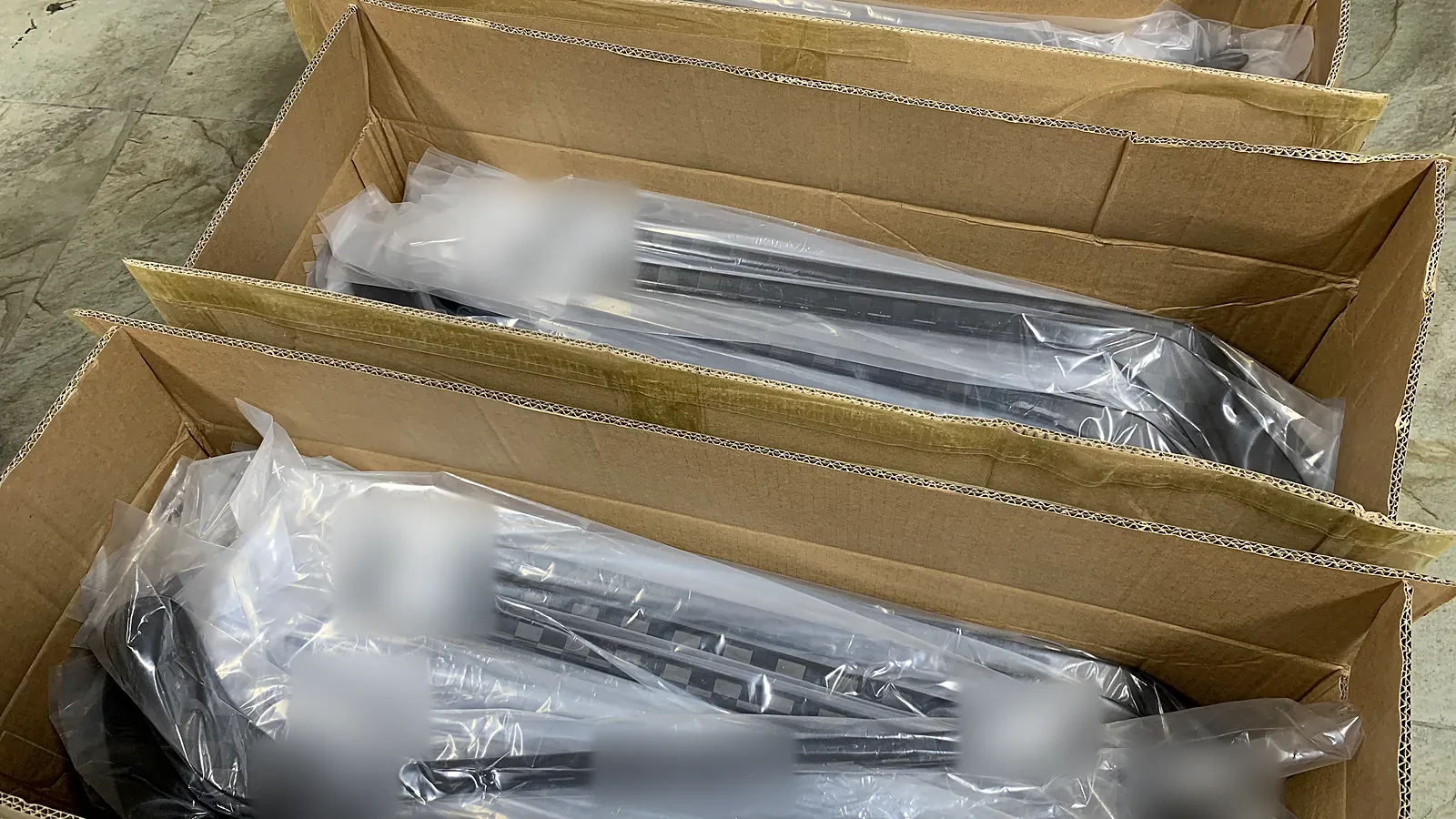
Real HockeySourcing hockey sticks prepared in individually protected small batches.
Start With Product Testing, Not a Full Product Line
The first stage should answer whether the stick meets the intended performance and quality expectations. Focus on weight and balance, flex response and release, blade and curve feel, grip and finish, consistency, and suitability for the intended player.
HockeySourcing commonly sees player-led founders begin with a small number of stock or blank sticks. Three to six sticks can be a practical testing example for some founders, but it is not a fixed package or universal minimum.
Do not rely only on the founder’s favorite stick. Include testers who resemble the intended buyers and record their actual feedback.
If the supplier or construction is new, in-stock or blank hockey sticks can help separate performance testing from the cost and delay of a full custom program.
The Next Test Is Market Demand
Product testing asks, “Is this a good stick?” Market testing asks, “Will a specific person buy it, at this price, in this specification?”
For many new sellers, the first customers come from teammates, friends and family who play, players at a local rink, a coach’s students, a creator’s followers, or a local hockey community.
Instead of asking whether someone might buy someday, record the details required for an order: hand, flex, curve, player type, grip or finish, quantity, target delivery date, and payment status.
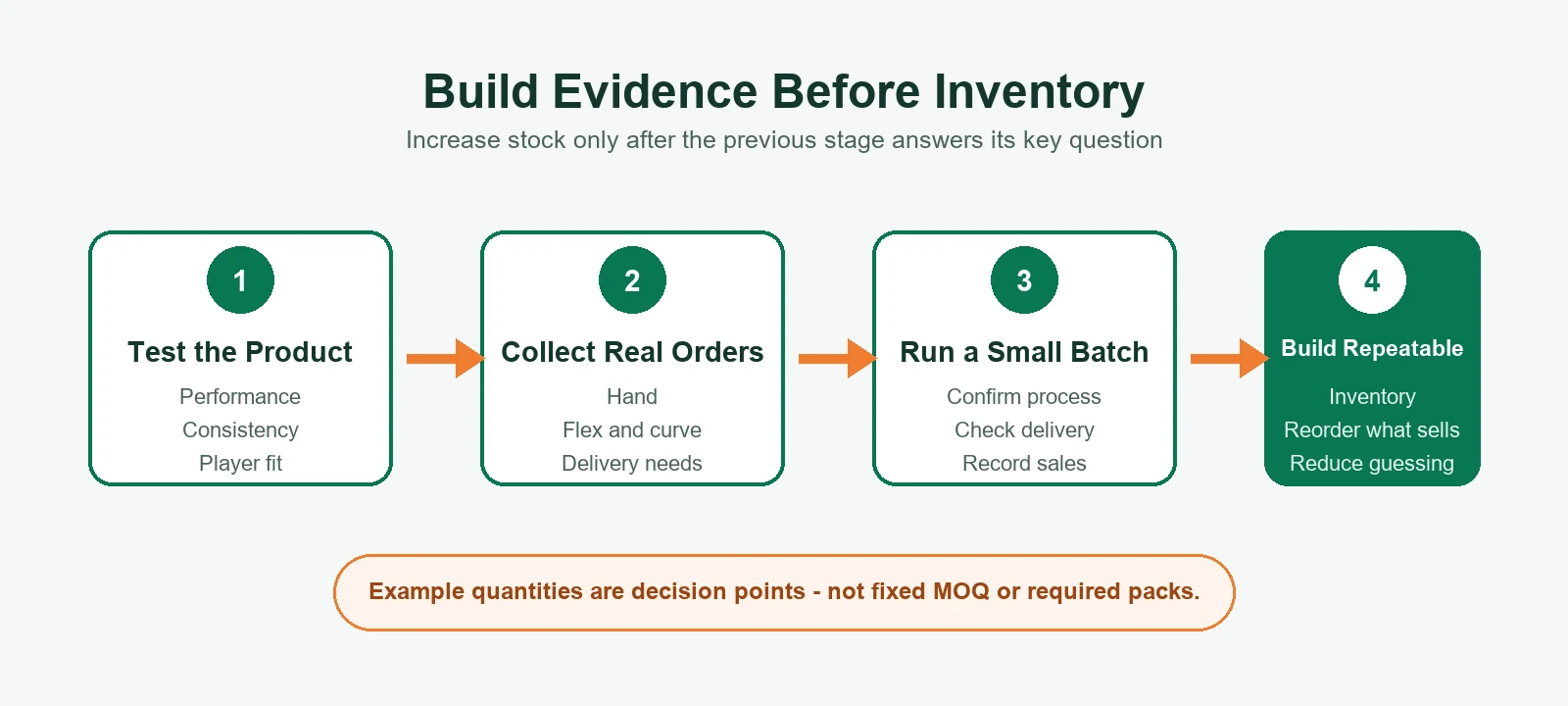
Test the product, collect exact demand, run a small commercial batch and build inventory from sales evidence.
Use Pre-Orders Carefully
- Test the product and confirm that it is suitable for sale.
- Show buyers the available or planned specifications.
- Record each buyer’s exact requirements.
- Confirm supplier availability, lead time and freight before promising delivery.
- Collect an agreed deposit or payment.
- Place the order using the collected specification mix.
- Keep buyers updated until delivery.
This model can work well for a player selling to teammates or a coach collecting orders from students. It reduces inventory pressure, but it also requires honest timing. Custom production, freight and customs can all affect delivery.
Scale in Stages
There is no single quantity that defines a successful launch. The following stages are examples of decision points, not fixed packages or required minimums.
Stage 1: Product test
Use a small number of sticks to test performance and consistency. For some founders this may be three to six sticks; another project may need a different mix.
Stage 2: Small commercial batch
After testing, collect orders or strong specification requests. Some founders then move to a batch such as 24 or 36 sticks, but only when demand supports it. Confirm consistency, the specification mix, the payment process, freight, delivery and customer response.
Stage 3: Repeatable inventory
Inventory becomes more reasonable when the seller has sales records. Track which hands, flexes and curves sell, how long they take to sell, which requests could not be filled, and which products remain.
Avoid Turning Slow Stock Into a “Mystery” Product
Some sellers try to move unpopular specifications through mystery offers or heavy discounts. That may recover part of the cash, but it does not correct the original planning problem.
Before discounting, ask whether the hand, flex or curve was unsuitable, whether pricing or product education was weak, whether the founder bought before building a sales channel, and whether the product arrived too late for the selling season. Use the answer to improve the next order.
What a Player-Led Brand Can Learn From Brash87
Brash87 is a useful public example of both the opportunity and the limits of a player-led hockey brand.
Former NHL player Donald Brashear launched the company around an affordable, high-performance hockey stick concept. In 2016, the business received national attention and secured a CAD 500,000 investment on Dragons’ Den. Later NHL reporting states that the company is no longer in business.
That history does not prove why the company closed, and it should not be used to claim that a particular inventory decision caused the outcome. It does show a broader point: a recognizable player, a clear product story and outside investment can help a brand enter the market, but they do not replace repeat demand, inventory discipline, distribution and reliable operations.
For a smaller founder, use personal credibility to open the first conversation – then use real orders and repeat purchases to decide how the business should grow.
Source: NHL – Color of Hockey: Thomas makes successful pitch on Dragons’ Den
A Low-Inventory Launch Checklist
- We know the first target customer.
- Relevant players have tested the product.
- Feedback covers more than one person’s preference.
- We have recorded hand, flex and curve requirements.
- The next quantity is supported by orders, requests or sales history.
- Supplier availability and timing have been checked.
- Freight, customs and other landed costs are included.
- Customers have received realistic delivery expectations.
- We will record what sells and what remains.
- We know when to consider private label or OEM.
Build Evidence Before You Build Inventory
A new hockey stick business does not need to look large on its first day. It needs to learn quickly without making expensive assumptions.
Start with a product test. Use your hockey network to collect real specification demand. Move into a small commercial batch only after validating the product and ordering process. Build repeatable inventory after sales records begin to replace guesses.
Planning your first hockey stick order? Contact HockeySourcing with your target market, player type, testing stage and expected specifications. We can help you compare an in-stock test with a later private label or OEM path.