
For most new hockey stick brands, the safer first step is to test a stock or blank hockey stick before investing heavily in a logo and full custom graphics.
This does not mean branding is unimportant. It means the first test should answer the most important question first: does the product perform well enough to continue? A logo cannot confirm weight, balance, flex response, curve preference, durability or consistency.
Once the product has passed a broader test and the founder has evidence of real demand, private label graphics become much more useful. There are exceptions—especially for experienced sellers and players or creators with an established audience—but branding should still not replace product validation.
Blank, Private Label and Full Custom Are Different Stages
Buyers often use “custom hockey sticks” to describe several different levels of customization. It is more useful to separate them:
| Stage | What changes | Best question to answer |
|---|---|---|
| Stock or blank stick | Existing construction and specifications, without a buyer-specific graphic program | Does the product meet our performance and quality expectations? |
| Simple private label | Buyer logo or a relatively simple branded appearance | Will buyers respond to our brand on a proven product? |
| Custom graphics | More complete visual design for a model or collection | Which presentation supports the intended market position? |
| Full OEM development | Product and specification development beyond appearance alone | Can this become a repeatable, scalable product program? |
A new brand does not always need to begin at the first row. But it should know which question each stage is meant to answer.
Why Blank Sticks Usually Make the Better First Test
1. They keep the test focused on performance
When founders begin with graphics, discussions quickly move toward colors, logo size, finishes and revisions. Those decisions can consume time without producing evidence about how the stick performs.
A blank-stick test keeps feedback centered on weight and balance, flex and release, curve and blade feel, consistency between samples, and suitability for the intended players. If the product does not pass those tests, the design work has not solved the real problem.
2. They make comparison easier
Testing more than one specification is often more valuable than producing several branded sticks in one favorite configuration. The founder and one friend liking the same stick is useful feedback, but it does not prove that the configuration fits the wider market.
3. They reduce early commitment
Custom graphics can make an early sample feel like a finished commercial product. That can encourage a founder to order inventory before learning what buyers want. If customers later request combinations that were not purchased, the founder may hold the wrong stock and tie up working capital.
Product Testing and Market Testing Are Not the Same
Product testing asks whether the stick performs as intended. Market testing asks whether real buyers will purchase it, at an acceptable price, in specific configurations.
- Define the intended player and use case.
- Test stock or blank sticks for performance and consistency.
- Collect feedback from more than one or two players.
- Ask potential buyers for hand, flex and curve requirements.
- Confirm actual demand through inquiries, commitments or pre-orders.
- Choose the appropriate private label or custom program.
- Build inventory only when the specification mix is supported by evidence.
HockeySourcing’s in-stock hockey sticks can support the early testing stage. Buyers who have validated the product and market can then discuss a private label or OEM hockey stick program.
The Common Mistake: Designing Too Early
Many early-stage founders are not professional designers. They may spend substantial time trying different logos and graphics before confirming the product. A strong-looking sample may still have the wrong weight, flex, curve mix or target price.
Before committing to full graphics, a founder should know who the first buyer is, which product characteristics have been tested, how many different players have given useful feedback, which specifications buyers have actually requested, and whether the next order is a test, a pre-sold batch or inventory.
When Adding a Logo Early Can Make Sense
An experienced seller launching a new model
A seller who already understands the market may be testing a new construction or model alongside an existing range. A logo or distinct graphic can help players identify the new product and keep feedback separate.
A player or creator with a strong audience
A player, coach, creator or influencer may already have followers who connect a product with that person’s identity. A branded sample can help test audience response as well as product performance. Audience trust still does not remove the need to test quality.
A buyer with confirmed pre-orders
If customers have already confirmed both the branded concept and their required specifications, adding a logo earlier may be reasonable. The buyer is responding to known demand rather than guessing.
What Should the First Test Include?
There is no universal sample quantity or specification mix. A coach serving younger players may need more junior or intermediate options. A player selling to adult teammates may focus more on senior sticks. Common curves such as P92 and P28 can receive more attention, while specialized configurations are often safer to order against specific demand.
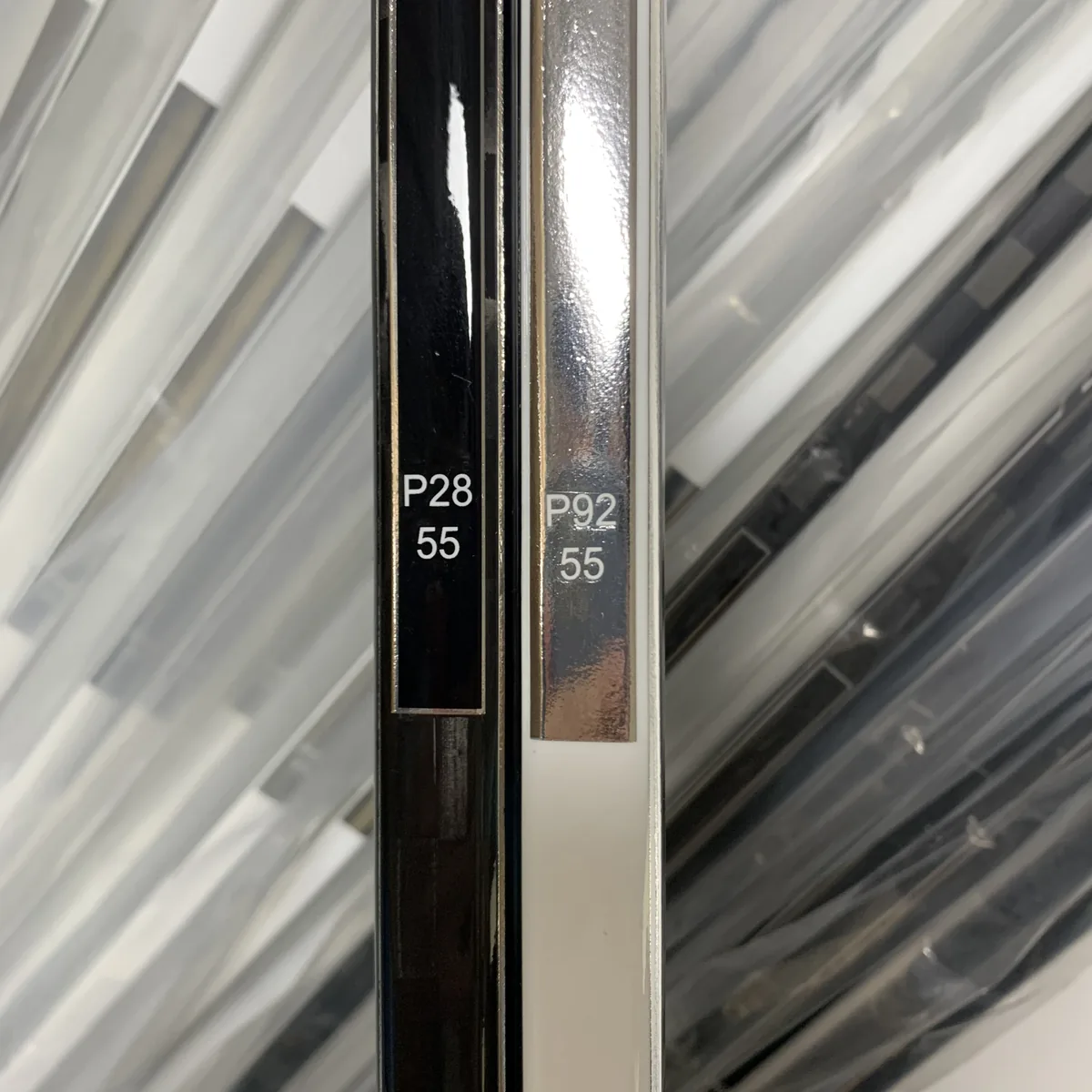
Left- and right-hand demand also varies by market and customer group. HockeySourcing has seen some U.S. groups with a relatively balanced split and Canadian groups with stronger left-hand demand, but this is a practical customer observation—not a universal market statistic. Each buyer should check local players, prior sales or collected orders.
A Simple Decision Framework
Choose blank or stock sticks first when the construction or supplier is new, only a few people have tested, the target specification mix is uncertain, no real demand has been collected, or design work would delay performance testing.
Consider simple private label or custom graphics earlier when you already understand the market, the sample must be distinguished from an existing model, you have a credible audience, buyers have confirmed specifications, and you still have a clear product-testing plan.
Move toward full OEM development when repeat demand is visible, the target product is clearly defined, specification decisions are supported by sales evidence, and the buyer can plan lead time, freight, customs costs and working capital.
Plan the Test Before You Plan the Artwork
For most new brands, the right sequence is to validate a stock or blank stick, gather broader player feedback and confirm real specification demand before investing heavily in custom graphics. For experienced sellers or people with an established audience, earlier branding can be reasonable—but only when it serves a defined test.
Planning your first hockey stick test? Contact HockeySourcing with your target market, player type and current sales stage. We can help you compare an in-stock test, a simple private label step and a longer-term OEM path.