
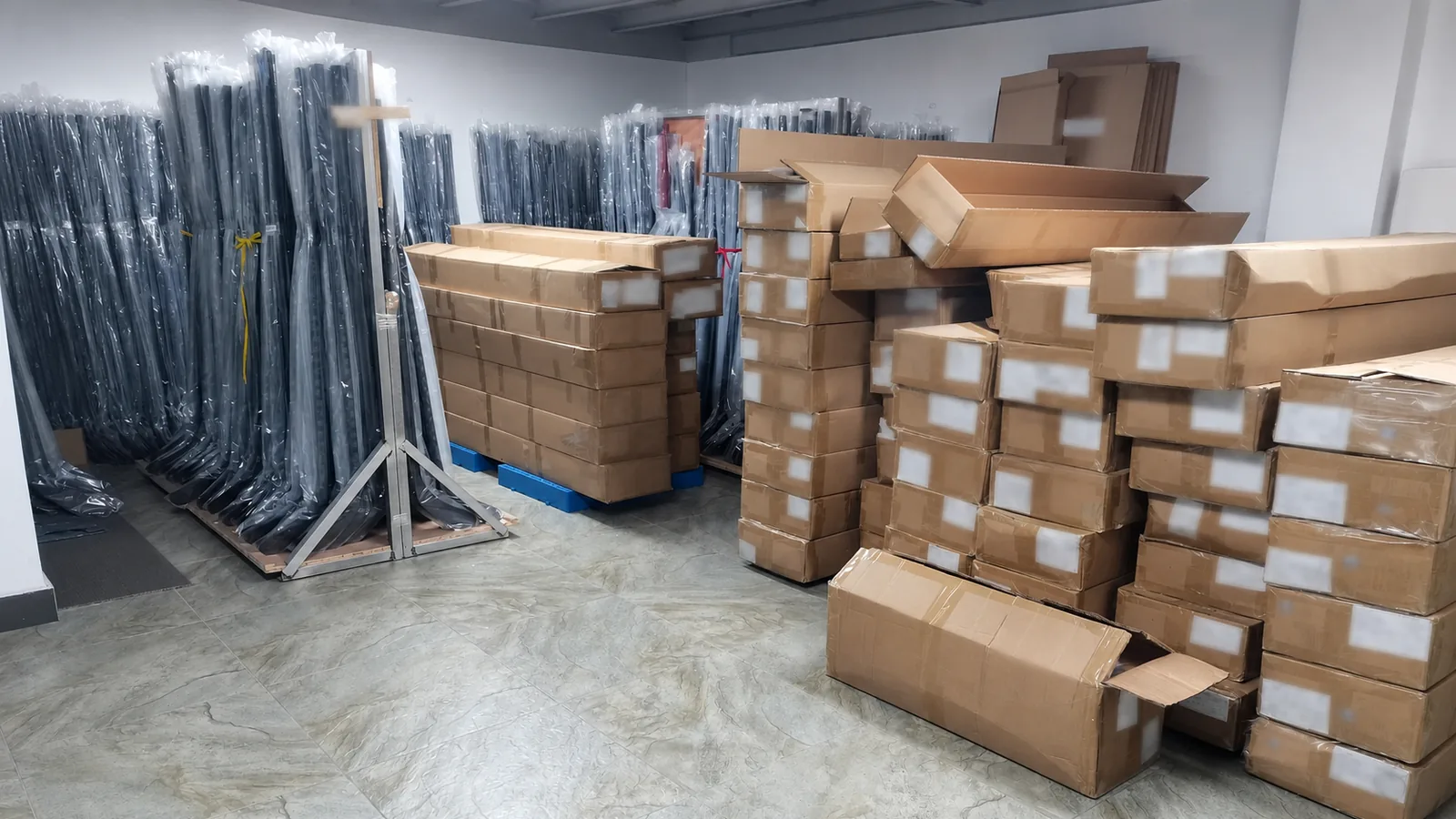
Real HockeySourcing inventory prepared in the warehouse.
There is no single first-order quantity that works for every hockey stick dealer.
A player testing a small brand with friends may begin with only a few sticks. A coach may test samples and collect orders from players before buying. An established hockey shop may need a much broader assortment because a nearly empty stick display will not support its retail business.
The right quantity depends on three questions:
- Who will buy the sticks?
- What does the first order need to prove?
- How much inventory can the buyer sell without guessing?
At HockeySourcing, we normally recommend separating product testing from market testing. First, confirm that the stick meets the required performance and quality expectations. Then, confirm which specifications real buyers are prepared to order. Only after both steps should a new dealer build a larger inventory or invest heavily in custom graphics. Buyers who are still testing can begin by reviewing our in-stock hockey sticks before planning a private label program.
A Practical Starting Point by Buyer Type
The quantities below are examples from common customer situations, not fixed order requirements.
| Buyer type | Possible starting approach | Main purpose |
|---|---|---|
| Player starting a small brand | Around 3–6 sticks | Personal testing and feedback from friends or local players |
| Online startup with early demand | Collect orders first, then buy the required quantity | Reduce inventory risk and match actual specifications |
| Small brand after successful testing | A small commercial batch, sometimes around 24–36 sticks | Test real sales beyond the founder’s immediate circle |
| Coach or training program | Test 1–2 samples, then collect player orders | Buy for confirmed participants rather than hold stock |
| Established hockey retailer | A broader order, sometimes around 100 sticks or more | Build a credible in-store assortment across specifications |
These numbers should not be treated as a universal MOQ. Two customers ordering the same quantity can have very different risks depending on their audience, sales channel and specification mix.
Path 1: A Player Starting a Small Hockey Stick Brand
One of the most common early-stage customers is a hockey player who wants to create a small brand.
The first buyers may be friends, followers, local teams or other players in the same network. If the founder does not have a physical store, the first order is often a product test rather than a full inventory purchase.
In this situation, a few sticks may be enough to answer the first questions:
- Does the weight feel right?
- Do the flex and curve perform as expected?
- How do different players respond to the product?
- Is the quality consistent enough to continue?
If the test is successful, the next step should usually be to find actual buyers—not immediately to fill a warehouse. Some founders collect orders from friends, followers or local players and then purchase according to confirmed demand. Others move into a small commercial batch after receiving broader feedback.
Path 2: A Coach or Training Program
Coaches often follow a different buying pattern.
They may first ask to test one or two sticks. After using the product, they can collect orders from their players or students and place one combined purchase. This means they usually do not need to hold a large speculative inventory.
Sample availability and cost still need to be agreed with the supplier. A request to test a sample does not automatically mean that free samples are available.
For a coach, the most useful first-order question is not “How many sticks should I stock?” It is “How many players have confirmed their specifications and are ready to order?”
Path 3: An Established Hockey Retailer
An existing hockey shop may already purchase major brands through distributors. Its first order from a new supplier is not the same as a startup’s first product test.
A retailer has floor space, regular customers and a need to present a credible selection. Displaying only a few sticks may create too little in-store presence and may not cover the specifications customers expect.
For this type of buyer, an order around 100 sticks can be reasonable in some cases—but only if the retailer understands its local demand and can build the right mix. The risk is not only the total quantity. It is whether that quantity is distributed across useful hands, flexes, curves and player categories.
Do Not Build Inventory Before You Understand Demand
After a founder confirms that a sample performs well, the natural temptation is to place an inventory order immediately. That can create two problems.
First, inventory fixes the specifications in advance. A founder may buy the flex, curve and hand combinations that they personally prefer, then discover that real customers want different specifications.
Second, unsold inventory ties up cash. If sales are slower than expected, the new brand may feel pressured to reduce prices simply to recover working capital. That can damage both margin and brand positioning.
A safer sequence is:
- Test the product.
- Gather feedback from more than one or two players.
- Collect inquiries, pre-orders or specification requests.
- Build the first commercial order around evidence.
- Expand inventory as repeat demand becomes clearer.
One or Two Test Sticks Do Not Represent the Whole Market
A founder and a friend may both like the same stick. That is useful feedback, but it does not prove that the product suits every player.
Players have different preferences for weight, balance, flex, curve and overall feel. A product should be tested gradually with a wider group before the founder assumes that one configuration can serve the entire market.
The same principle applies to sales. Positive comments are not the same as confirmed orders. A new dealer should distinguish between people who say they like the product and people who are prepared to purchase a specific configuration.
How to Plan the First Specification Mix
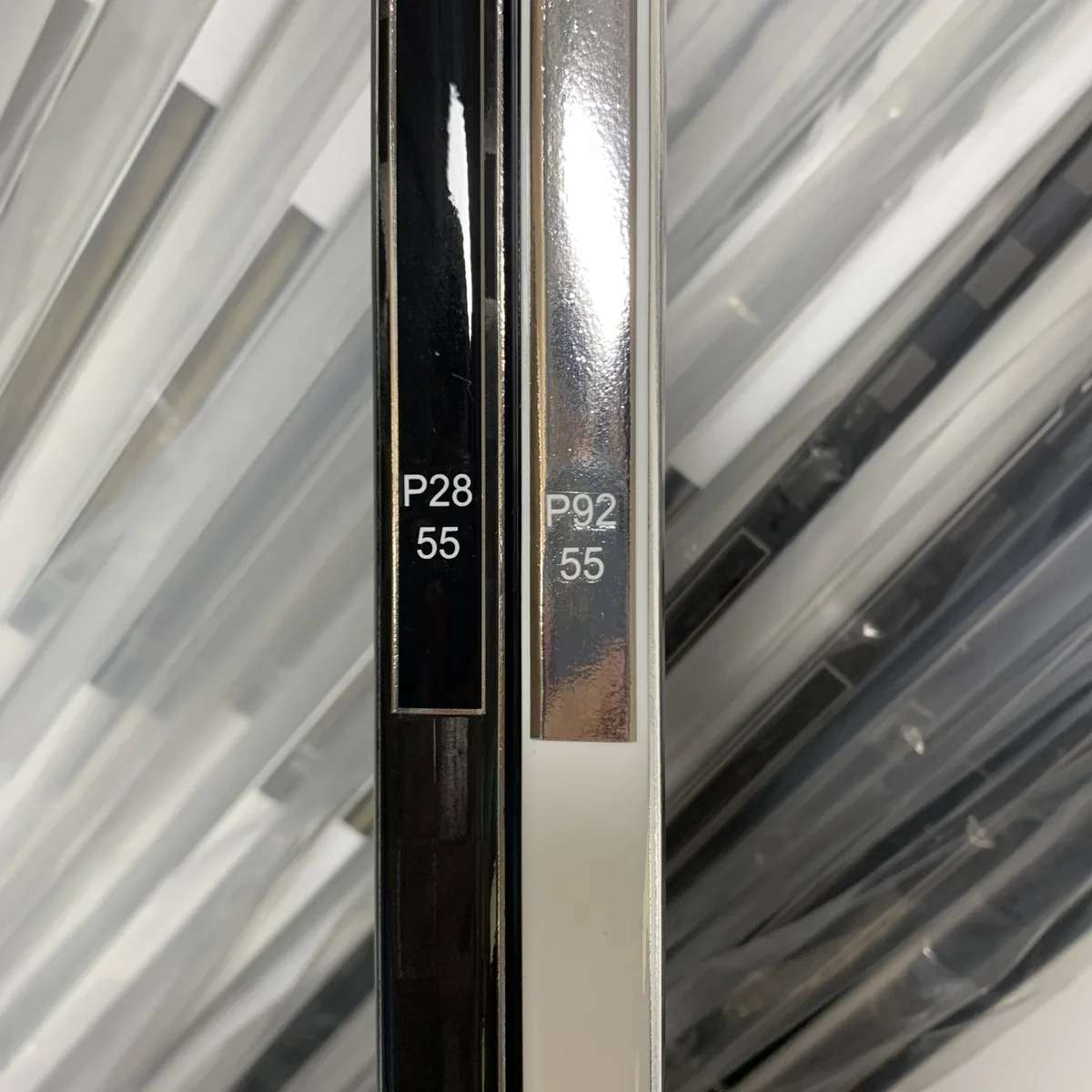
P28 and P92 are common starting curves, but the correct mix should follow buyer demand.
Start with the target buyer, not with a fixed ratio.
Player category
A coach serving younger players may need more junior and intermediate sticks. A player selling mainly to adult teammates may need a higher share of senior sticks.
Curves
Common curves such as P92 and P28 can receive more attention in an initial assortment. More specialized curves are often safer to purchase after receiving specific orders.
Left and right hand
The correct split depends on the local market. Based on HockeySourcing’s customer conversations, some U.S. customer groups can have relatively balanced left- and right-hand demand, while Canadian customer groups may show stronger left-hand demand. This is a practical observation, not a universal market statistic. Dealers should confirm the mix using their own players, store history or pre-orders.
What One Real Repeat-Order Case Shows
HockeySourcing reviewed one anonymized customer’s eight recorded order batches. The main order records contained 3,975 sticks across 315 non-zero specification lines.
Within this customer’s recorded orders:
- Left-hand sticks represented approximately 55.6%, and right-hand sticks 44.4%.
- P92 represented approximately 37.3% and P28 approximately 31.7%.
- P92 and P28 together represented approximately 69.1% of the recorded volume.
- 75 and 85 flex together represented approximately 62.2%.
This is a single-customer example, not a market-wide benchmark. However, it demonstrates an important point: an experienced repeat buyer does not build an assortment around only one personal preference. The order mix covers multiple hands, flexes and curves, and it evolves across repeated purchases.
Blank Sticks First—or Add a Logo Immediately?
For most new brands, HockeySourcing recommends testing stock or blank sticks before investing heavily in logos and graphics. Early design work can consume a great deal of time without providing any information about product performance. Once the product and market are clearer, the buyer can move into a private label or OEM hockey stick program with better specifications and fewer avoidable revisions.
There are two reasonable exceptions.
First, an experienced seller may already understand the market and be developing a new model that needs to be distinguished from an existing product. A logo or graphic can then be part of the new-product test.
Second, a player, creator or influencer with a strong personal brand may already have an audience that connects the product with their identity. In that case, adding a logo earlier can help test how the audience responds to the branded product.
Even in these situations, branding should not replace basic product and quality testing.
Include Lead Time and Landed Cost in the Decision
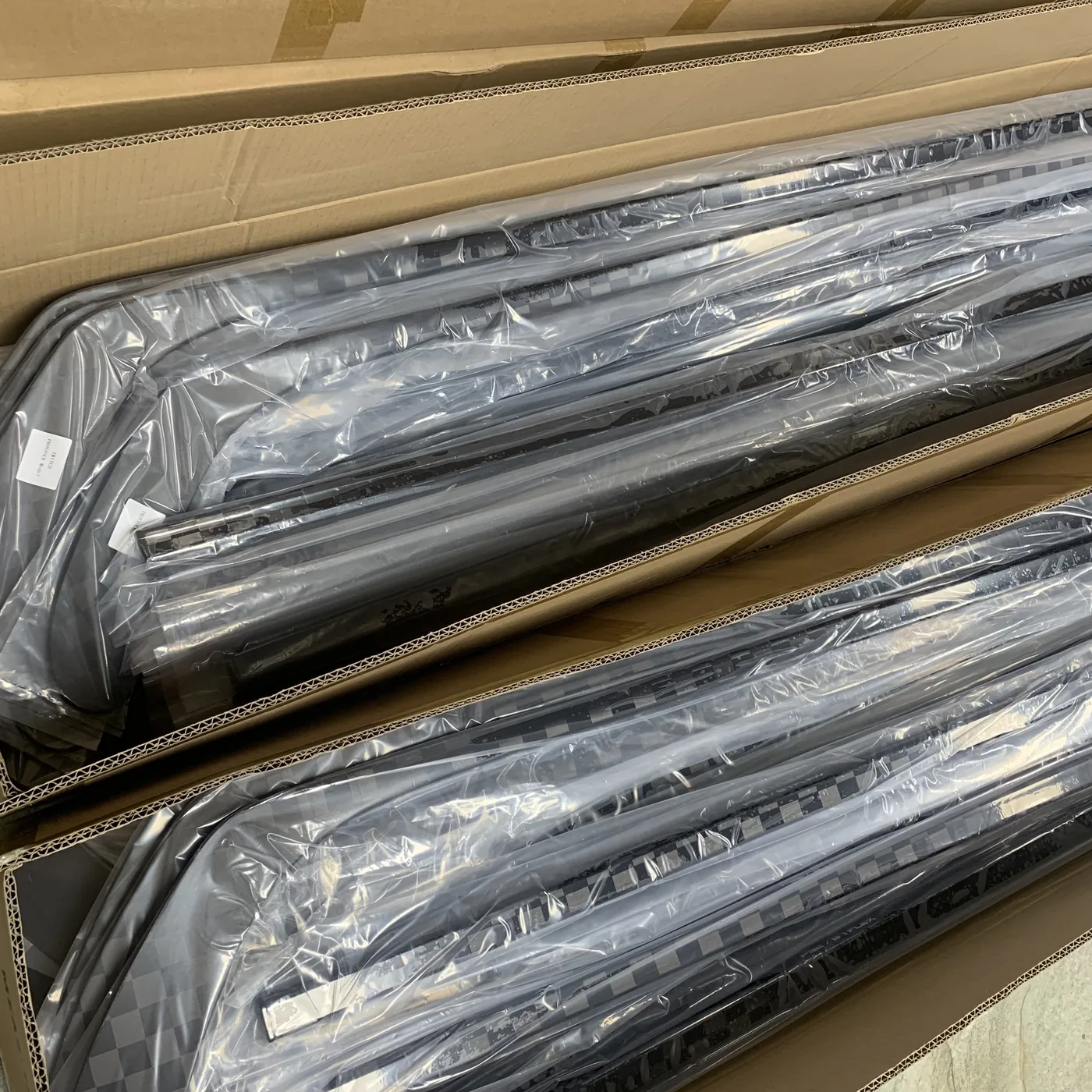
Individual protection and carton planning are part of the delivery process.
The purchase quantity is only one part of inventory planning.
A supplier’s production estimate is not always the date that products will be ready for sale. Dealers should also allow for production variability, international transportation, customs clearance and local delivery.
The real cost is also more than the factory price plus freight. Depending on the destination and transaction, landed cost may include duties, customs fees, local charges, currency movement and other import costs.
Ignoring these factors can create two problems: the dealer may run out of stock before replenishment arrives, or may discover that the actual margin is lower than expected.
Michael’s Practical Recommendation
Do not choose a first order quantity simply because it looks professional.
Choose a quantity that matches the evidence you already have:
- If you are still testing the product, keep the test focused.
- If the product is proven but demand is not, collect orders before building inventory.
- If you have a store, use your sales history and display needs to create a broad but controlled assortment.
- If you already have a market or personal brand, decide whether branded samples are part of a real commercial test.
- As sales develop, use actual order data to improve the next specification mix.
The objective is not to stay small forever. It is to expand at the right time, with the right specifications and with less avoidable inventory risk.
Planning Your First Hockey Order
HockeySourcing supports small hockey businesses through stock sticks, blank sticks, private label options and OEM development.
If you are planning a first dealer order, tell us:
- Your target country and customer type
- Whether you sell online, in a store, through a team or through a training program
- The player categories you serve
- The hands, flexes and curves you already know your buyers need
- Whether your goal is product testing, a small commercial launch or an established retail assortment
We can then review available stock and discuss a practical next step without treating one package size as the right answer for every business. Contact HockeySourcing to plan your first hockey order.